Peoples of Tarron:
The Solari Tribes
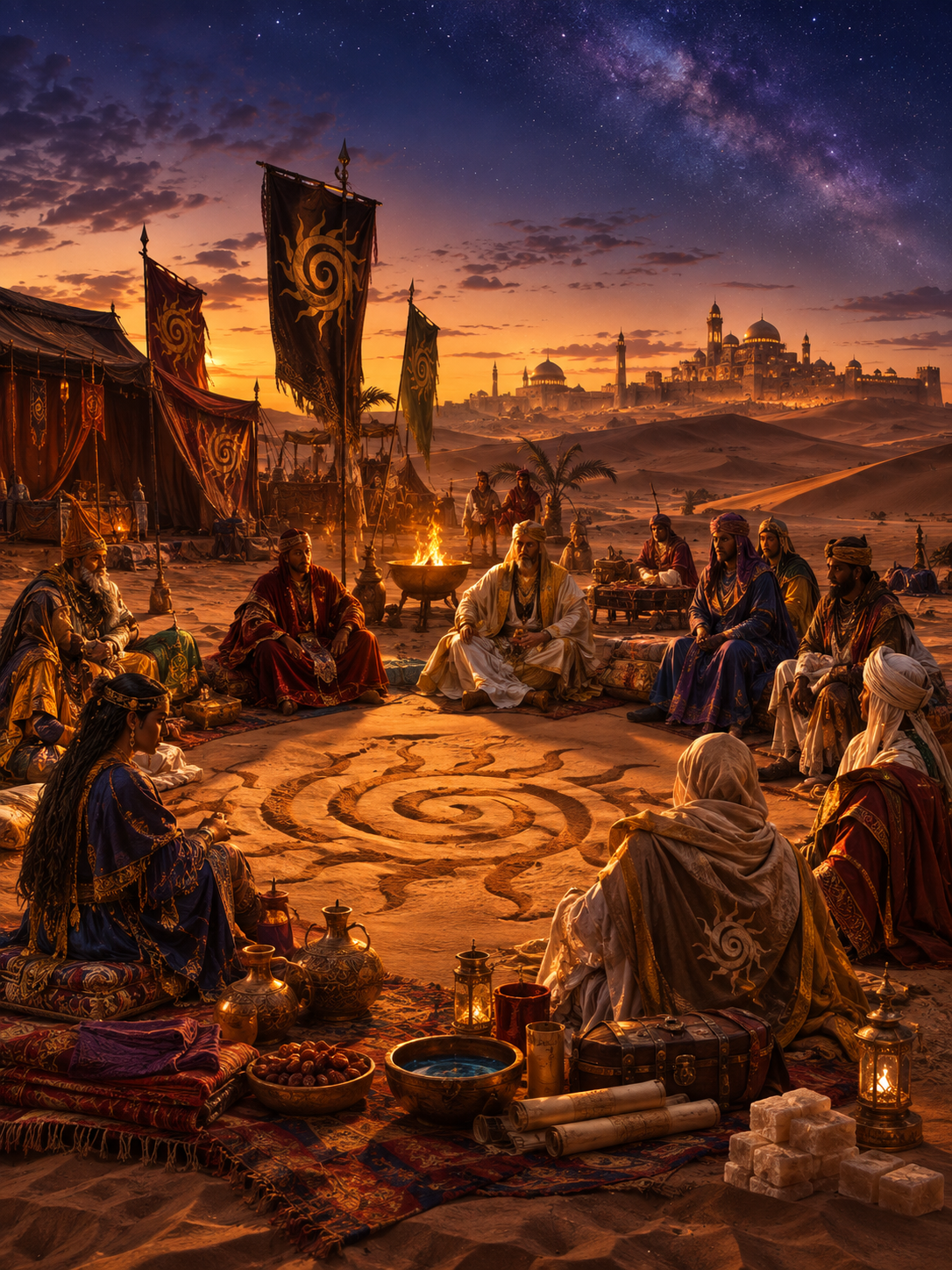
Faranhrôtar — Fast Travelers
Camel breeders, caravan masters, guides, and the wealthiest tribe.
Sunnagewandar — Cloth Weavers
Makers of dyed fabrics, desert moth silks, and decorated tent cloths.
Lederwardar — Leather Tenders
Crafters of armor, waterskins, sandals, saddles, dried meat, goat products, and durable desert goods.
Datensamnar — Harvesters of Plenty
Oasis keepers, growers of dates, pomegranates, lentils, beans, and guardians of water rights.
Saltwardar — Salt Keepers
Harvesters of salt flats, preservers, miners, and traders of one of the desert’s most precious commodities.
Sunnaskriftar — Sun Scribes
Lorekeepers, mediators, recorders of trade agreements, marriage accords, histories, and the Code of Sunnarium.
Brannsmidar — Emberforged / Fire Smiths
Metalworkers, incense crafters, defenders of faith, teachers, and spiritual craftsmen.
Tribal Bonds and Rivalries
Although outsiders often speak of the Solari as a single people, the seven tribes are not identical branches of one culture. Each tribe carries its own pride, trade secrets, customs, and view of what the Solari need most to survive. A Faranhrôtar caravan master may see mobility and trade routes as the lifeblood of the desert, while a Datensamnar oasis-keeper may argue that no road matters without water waiting at its end. These differences create tension, but they also make the Solari strong.
The Code of Sunnarium exists to keep those tensions from breaking the tribes apart. After the fall of the ancient Sunnarium, scattered family groups fought over food, water, and supplies before eventually forming larger tribes and trade relationships. The Code helped establish acceptable practices between groups and encouraged intertribal marriages among leaders’ families to preserve peace. To the Solari, unity is not assumed; it is practiced, renewed, and protected.
Trade binds the tribes as tightly as blood. The Lederwardar depend on the Datensamnar for food and water from the oases, while the Datensamnar rely on Lederwardar waterskins, sandals, and durable goods. The Saltwardar carry precious salt across the desert, preserving food and enriching trade. The Sunnagewandar clothe the tribes in woven fabric and dyed silk, while the Brannsmidar provide metalwork, weapons, incense, and spiritual teaching. No tribe can truly stand alone for long beneath the sun.
Faranhrôtar — Fast Travelers
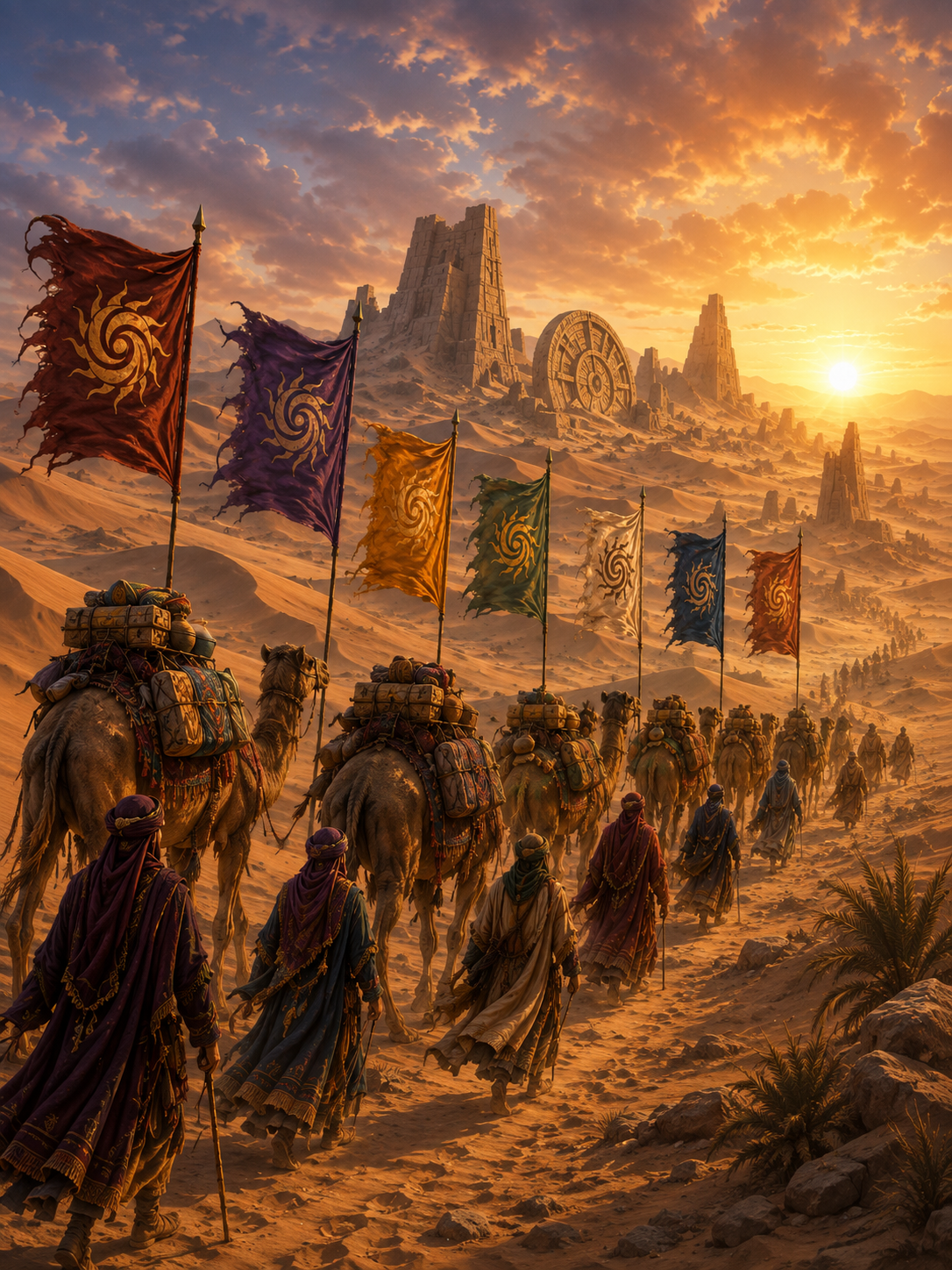
Among the seven Solari tribes, few are as widely recognized—or as quietly influential—as the Faranhrôtar, known in Common as the Fast Travelers. Masters of camel breeding, caravan routes, and desert navigation, the Faranhrôtar connect the scattered peoples of the Sea of Sands. Their caravans carry food, water, cloth, leather, salt, metalwork, news, and travelers across distances that would swallow the unprepared.
Because every tribe depends on safe passage through the desert, the Faranhrôtar hold a place of unusual respect among the Solari. Their wealth comes not only from trade, but from trust: a Faranhrôtar guide knows where the dunes shift, where water may be found, which routes are safe by moonlight, and when the sands themselves seem unwilling to be crossed. Their leaders are often viewed as near-nobility, and when the Council of Tribes gathers, the words of the Fast Travelers carry great weight.
Yet the Faranhrôtar are not rulers of the Solari. They are the road between tribes, the bond between distant oases, and the living memory of every path that still survives beneath Ashal-Sol’s gaze. To travel with them is to place your life in their hands—and few in the Sea of Sands are trusted with more.
Sunnagewandar — Cloth Weavers
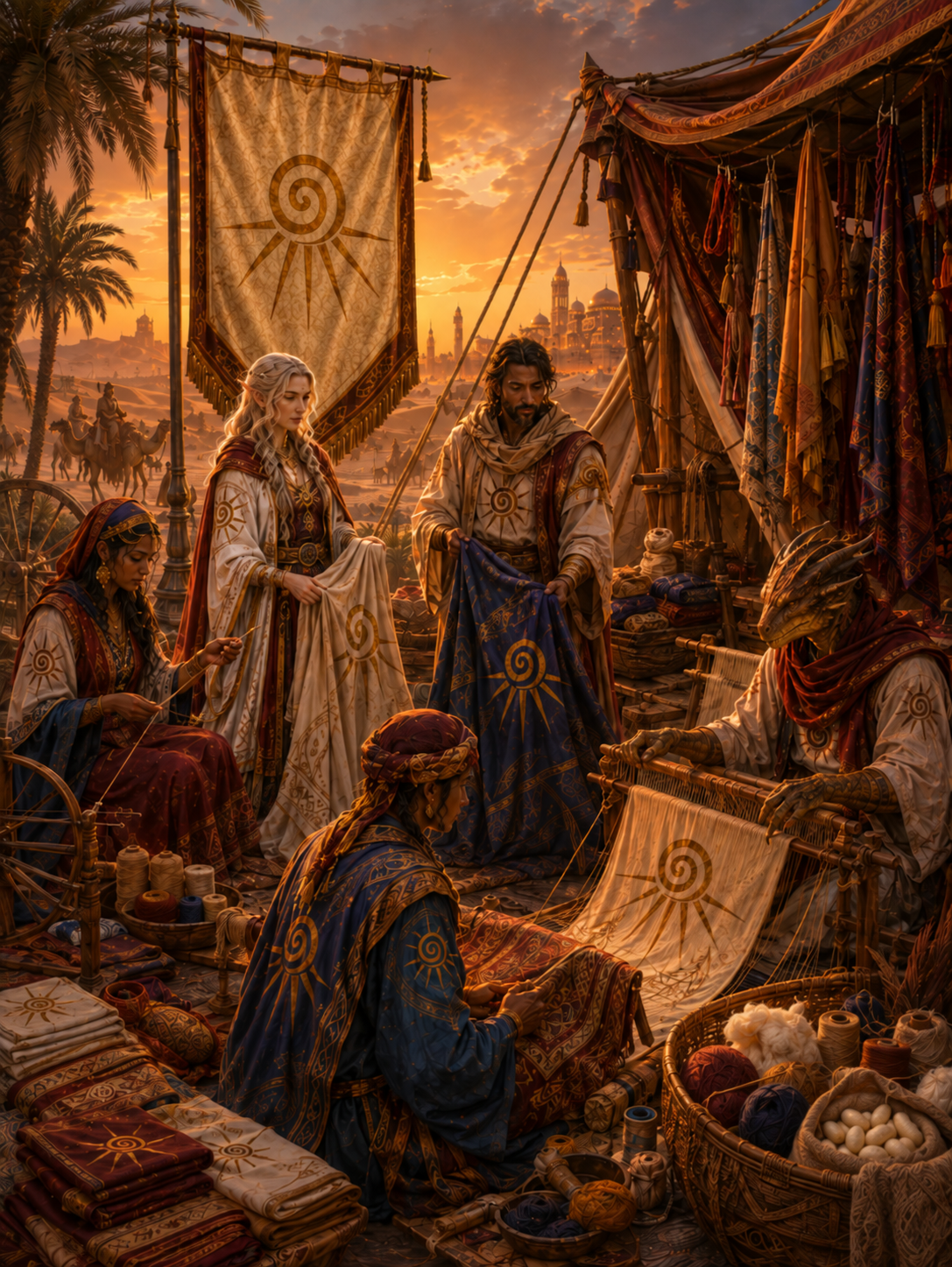
Among the seven Solari tribes, the Sunnagewandar—known in Common as the Cloth Weavers—bring color, comfort, and beauty to the unforgiving Sea of Sands. They create fine cloth from the soft Kashmir fiber of desert goats and lustrous silk from the cocoons of desert moths. Their work becomes the layered robes, protective garments, and richly decorated tent cloths seen throughout Solari camps.
To the Sunnagewandar, cloth is never merely decoration. It shields travelers from the relentless sun, blowing sand, and desert wind while carrying the traditions and faith of the Solari from one generation to the next. Gold, crimson, deep indigo, and other colors of the desert sunset appear throughout their weaving, while the spiral sun of Ashal-Sol is embroidered into garments and tents as a reminder that all seven tribes live beneath the same light.
The care required by their craft makes the Sunnagewandar less nomadic than many of their kin, though they travel more widely than the oasis-dwelling Datensamnar. Much of their finest silk passes through Marhaven for export to distant lands, while the durable cloth they produce for everyday life is traded throughout the Solari tribes. Wherever their fabrics travel, they carry with them the skill, memory, and enduring beauty of a people who learned to flourish beneath the desert sun.
Lederwardar — Leather Tenders
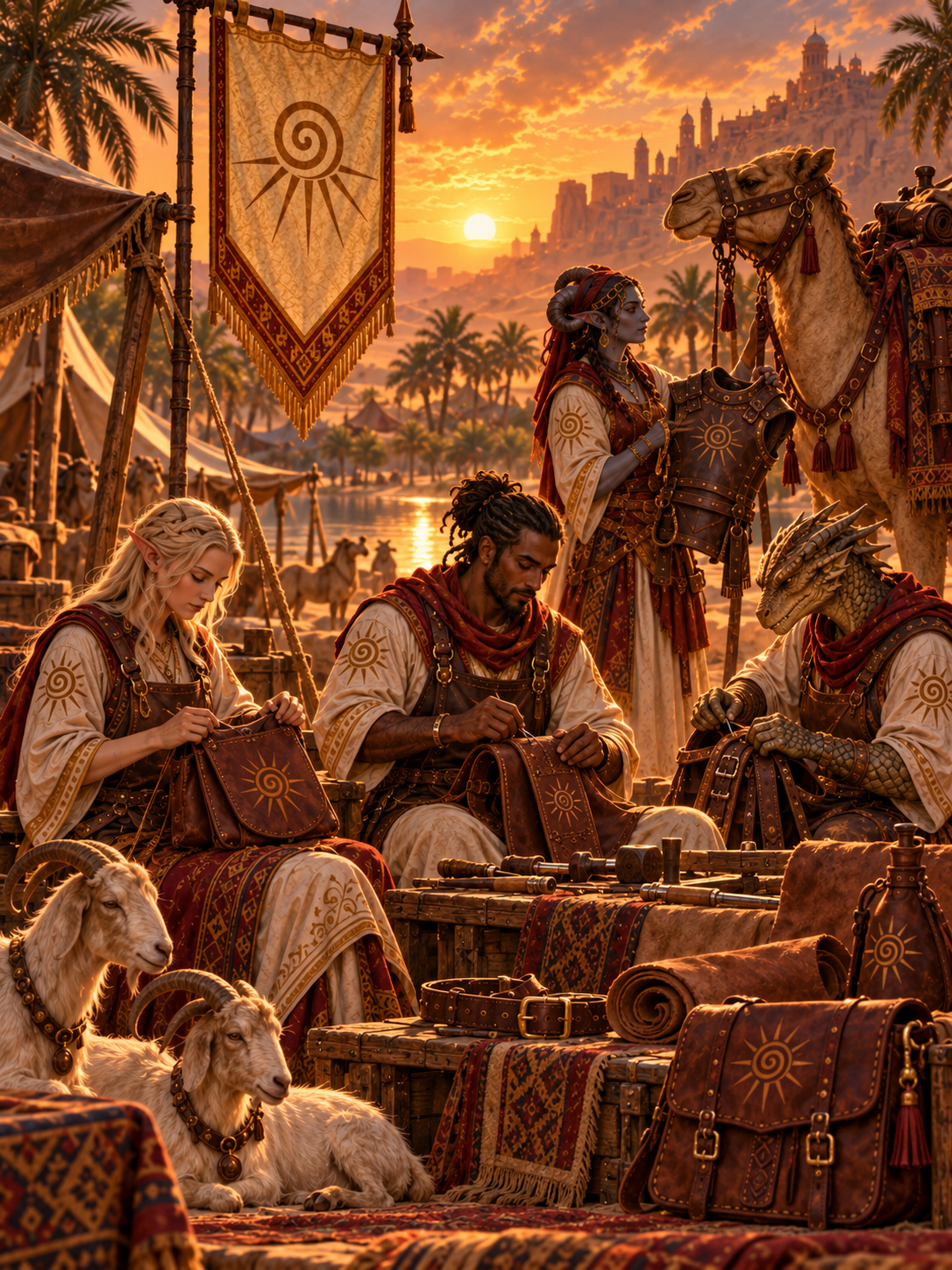
The Lederwardar, translated into Common as the Leather Tenders, are the Solari masters of leatherworking and keepers of the hardy desert goats upon which much of their craft depends. These remarkable animals can survive on nearly any organic material found in the dry wastes, providing leather, meat, milk, and the soft Kashmir fiber prized by Solari weavers.
From these resources, the Lederwardar create the durable goods that make life and travel across the Sea of Sands possible. Their armor, waterskins, satchels, sandals, raw leather, and tack for camels and horses are traded throughout the seven tribes. They also prepare dried meat for long journeys and produce goat’s milk and soap for daily use.
Their work connects them closely to the other Solari. The Sunnagewandar rely on their Kashmir fiber for trade with Sunnagewandar for cloth, while the Faranhrôtar depend upon their waterskins, saddles, and harnesses to keep caravans moving. In a land where a broken strap or leaking waterskin can become deadly, the Leather Tenders are valued not only as skilled craftspeople, but as guardians of survival beneath the light of Ashal-Sol.
Datensamnar — Harvesters of Plenty
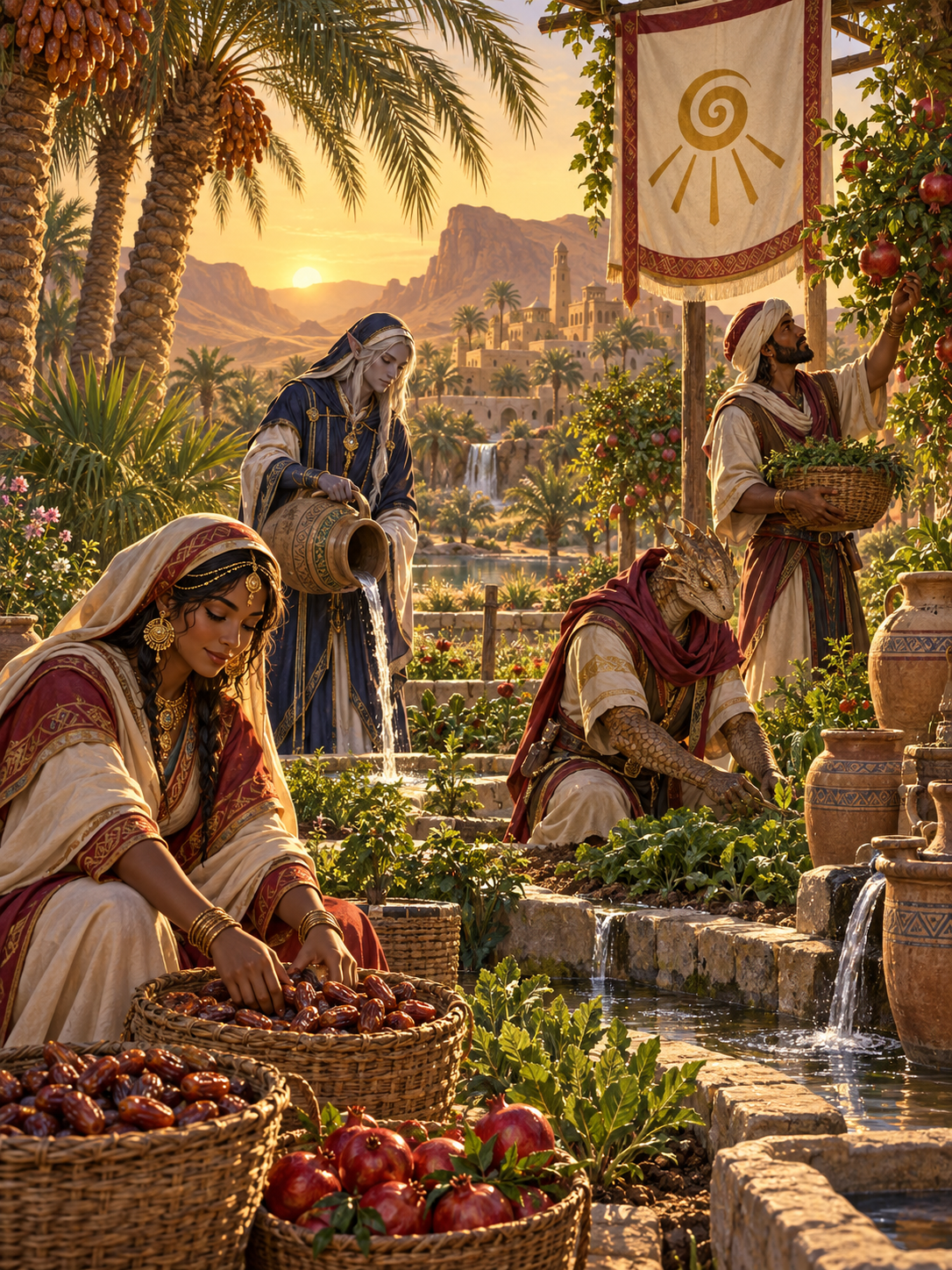
The Datensamnar, translated into Common as the Harvesters of Plenty, are the least nomadic of the seven Solari tribes. Most make their homes around the oases and fertile groves of the Sea of Sands, where they cultivate the scarce patches of land capable of sustaining crops and carefully watch over the water upon which desert life depends.
They grow hardy beans suited to the arid climate and harvest dates and pomegranates from plants that thrive around the desert’s precious water sources. While many Datensamnar remain close to these groves, others travel between the tribes and to Marhaven, trading food, water, and produce for the goods their communities cannot make themselves.
Among the Solari, the Datensamnar are more than farmers. They are stewards of some of the desert’s most valuable places. Their oases provide food, water, shade, and respite to travelers crossing the Sea of Sands, making the Harvesters of Plenty an essential link in the survival and prosperity of all seven tribes beneath the light of Ashal-Sol.
Saltwardar — Salt Keepers
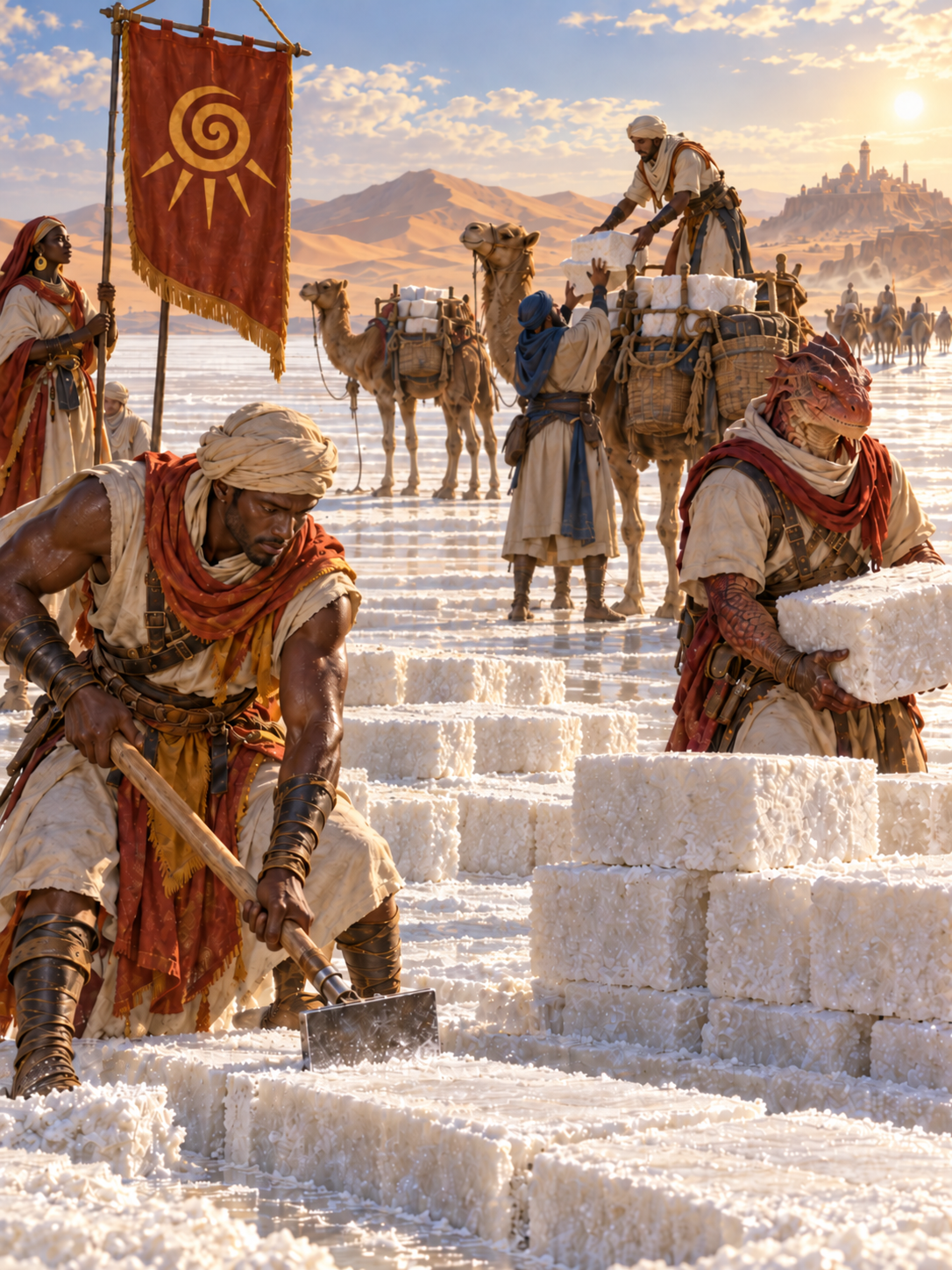
The Saltwardar, translated into Common as the Salt Keepers, are among the most traveled of the seven Solari tribes. They journey constantly between the salt flats of the Sea of Sands, the scattered tribal communities, and the markets of Marhaven, harvesting salt from the brilliant white expanses where few others choose to linger.
Salt is cut and mined into dense bricks before being loaded onto camelback for transport across the desert. To the Solari, it is far more than a seasoning. Salt preserves meat and other foods for long journeys, allowing caravans and distant camps to endure where fresh provisions cannot. Its usefulness also makes it a valuable trade good beyond the Sea of Sands.
Where outsiders may see only barren earth and blinding white flats, the Saltwardar see abundance. Their knowledge of the salt lands, their constant travel, and the value of the resource they carry make them an essential part of the network that binds the seven tribes together beneath the light of Ashal-Sol.