Cragborn Race
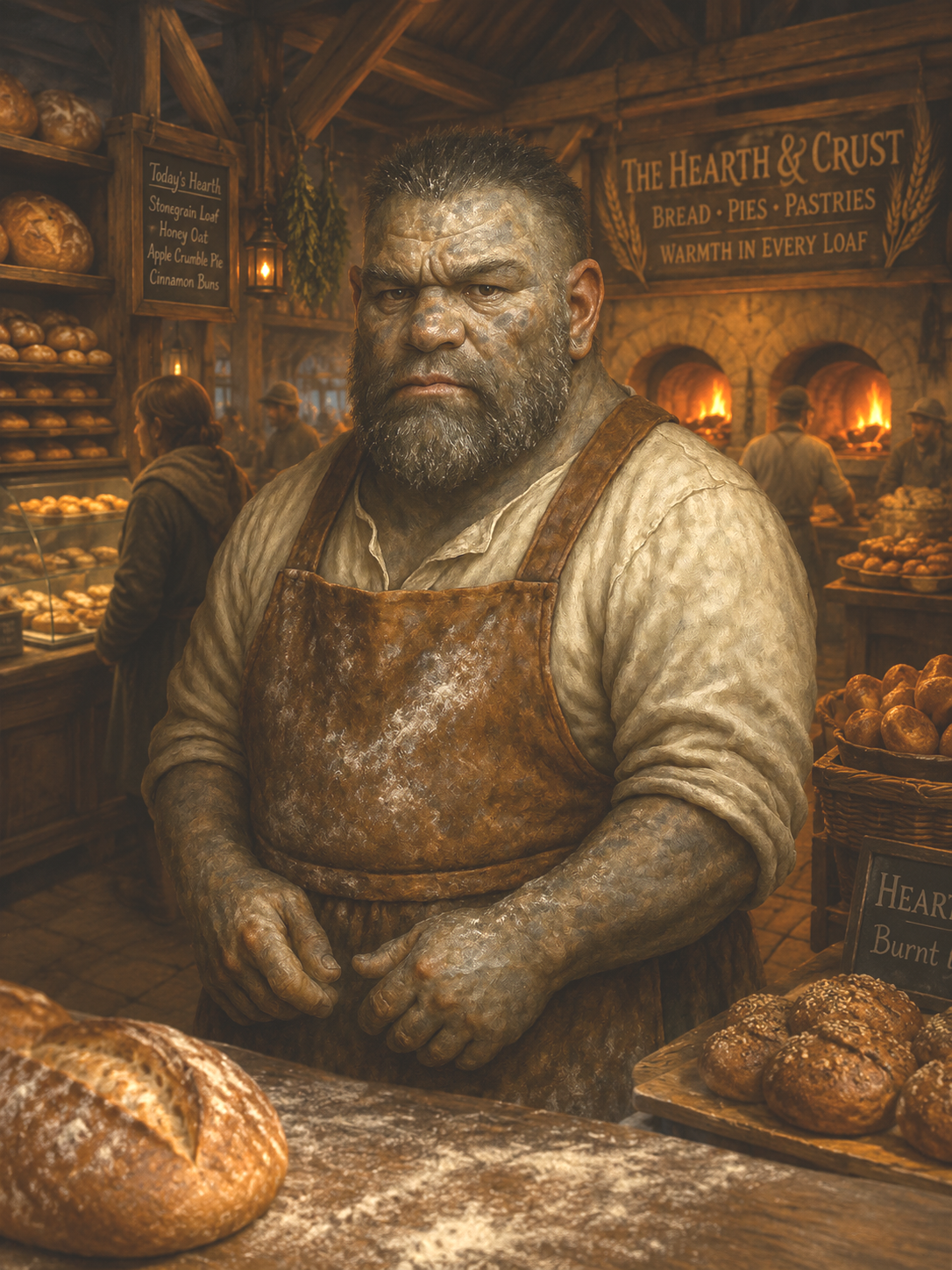
Legends claim they were once giants who defied their kin in the age of gods, retreating into the mountains to live among mortals. Over generations they diminished in size, but not in resilience. Some say they were cursed, others believe they chose humility.
Children of the Crags
Cragborn stand well above most other folk, ranging from six and a half to seven and a half feet tall. Their bodies are broad-shouldered and built for endurance, with a solid, almost sculpted appearance. Their skin carries the hues of the mountains—gray, slate, earthen tan, or ruddy like granite.
Their hair is coarse and practical, most often black, dark brown, or ash-blond, and is worn short or tied back to keep out of the way during labor. Many Cragborn are marked at birth with faint striations, veins, or patches across their skin that resemble mineral seams in stone. These natural markings are a source of quiet pride, seen as signs of their ancient blood and the mountains that birthed them.
Enduring as Stone
The Children of the Crags live simple but enduring lives, shaped by the harsh environments of their mountain homes. They are a practical people, valuing hard work, reliability, and resilience above all else. Communities are often small and tightly knit, forged in the need to survive storms, rockfalls, and long winters. Every Cragborn knows that endurance is not merely an individual trait—it is the strength of the group holding together when the mountain tests them.
Though they can appear stern and stoic, Cragborn are not joyless. They prize honest labor, hearty food, and the warmth of shared hearths. Their humor is dry and understated, surfacing most often after long workdays or during festivals that celebrate the mountain’s bounty—harvests of stone, ore, or game.
The Weight of Legacy
Legends among the Cragborn speak of a time when their ancestors were closer to giants, towering and unyielding as the peaks themselves. They claim that their blood carries a shard of that strength, though tempered by centuries of living among smaller folk. This sense of heritage makes them proud, but rarely arrogant—they see themselves as guardians of something older than kingdoms, born of the stone’s patience and permanence.
Cragborn seldom seek conquest or glory; their ambitions are quieter but no less enduring. They build settlements that last, raise families meant to thrive across generations, and carve their names into the history of the mountain itself.